The Pixar film ‘Inside Out’ is brilliant for working with children, to help them explore how their feelings drive their thoughts and behaviours. The story is an adventure that takes place in the mind of an 11 year old girl, featuring her emotions as characters. 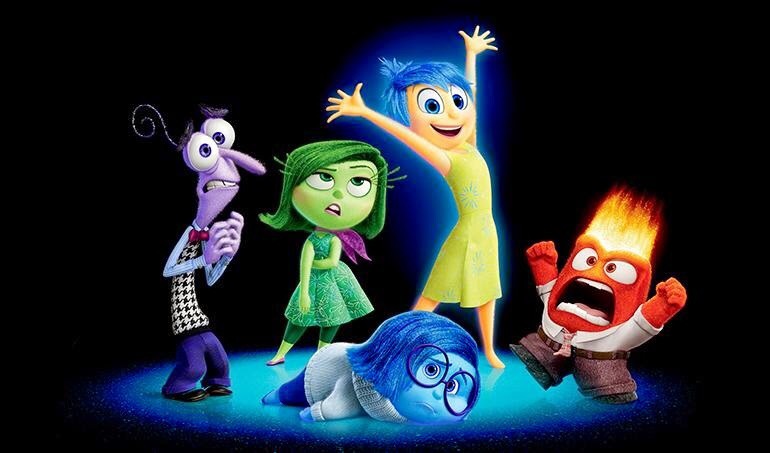
Each of the characters in the film was designed that way for a reason. Anger is shaped like a brick, Joy is based on a star, Sadness – tear drop and Fear is long and thin like a nerve. I read somewhere that Disgust is supposed to be broccoli but that just might be an old wives tale.
With this activity, you can help children to create their own characters to represent their emotions.
1. Help them to become comfortable with drawing abstract shapes and scribbles. Ask them to close their eyes and just let the pen move around the page. Put on some dramatic music and ask them to let their pen move instinctively to the music, in whichever way feels right.
2. Now get a piece of paper and divide it into 6. Label each box with an emotion.
3. One by one, ask the child to remember a time they felt each emotion. Ask them to describe in detail what they could see, hear, and feel what they felt at that time. Be careful with this, especially if they’ve experienced some kind of trauma. Ask them to think of something that happened in school, or somewhere that isn’t likely to lead them to access anything that could be too much for the session. When they’re ready, invite them to, without thinking about it, draw a shape in the box to go with the emotion. Give each shape a face with eyes and expressions to fit. There’s a brief guide below for getting faces right by adjusting the eyebrows and the mouth. They can colour each of them in with crayons, pastels or paint, in colours that they associate with each feeling. In the film, Anger is red, Joy is yellow, Disgust is green, Fear is purple and Sadness is blue. They can find their own colour code.

Once you have these characters you can use them for anything you can imagine. They could make comics about them, play drawing games with them, make profiles for them, animations, all kinds of things. Some good questions to ask about the characters are:
1. Do they have a name?
2. What is their goal?
3. What do they want / need?
4. How can they help you?
5. What would you like to tell them?
If you can get the emotions to talk to each other, maybe in a comic or an animation, that can be very powerful. The characters in the film sometimes worked together and sometimes against each other. The thing that stopped the hero from running away from home in the end was when the Sad character and the Joy character finally understood each other, and learned to work together.
As always, the best way to understand this activity is to do it yourself first. Feel free to share your own characters by contacting me and I’ll post them on here.
Here’s a quick guide to facial expressions:

 jennydrewsomething
Leave a comment